Portfolio Realignment in the Petroleum Sector: Capital Strategy and the Long Road to Energy Transition

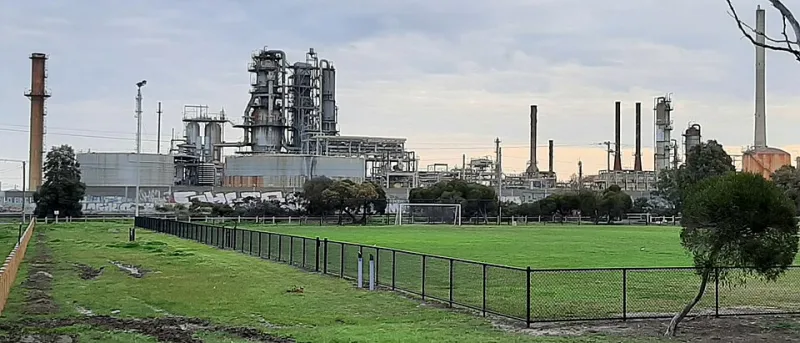
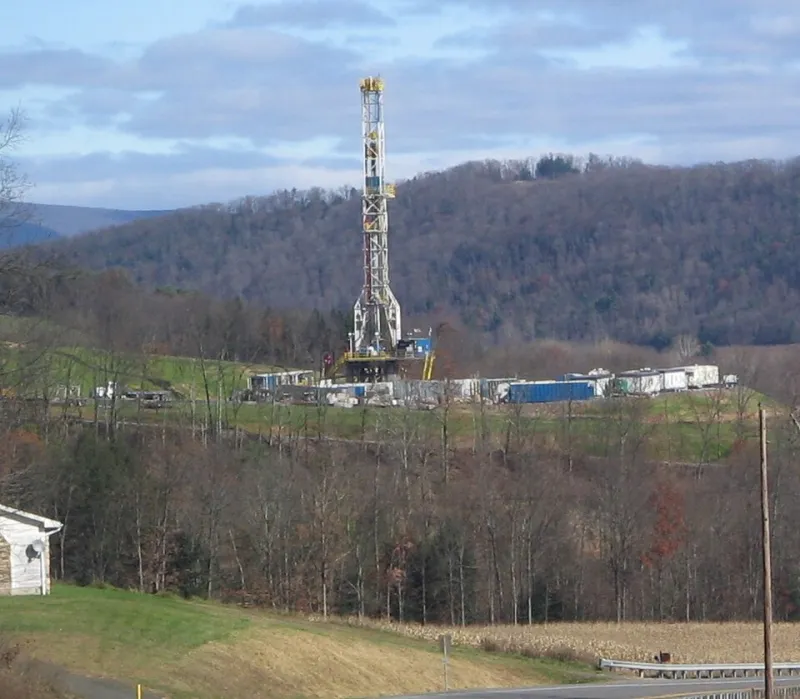
Photo: Walter Siegmund (talk), CC BY 2.5, via Wikimedia Commons
The phrase "energy transition" has become so ubiquitous in corporate communications and analyst reports that it risks losing operational meaning. For petroleum sector professionals, however, the strategic choices embedded in that phrase are anything but abstract. They translate into capital budgets, asset dispositions, organizational restructuring, and ultimately into the competitive positioning of companies that will either adapt successfully or find themselves misaligned with the market environment taking shape over the next decade.
This analysis examines the strategic landscape as it stands heading into 2025 — not through the lens of policy advocacy or climate ideology, but through the market intelligence framework that guides sound business decision-making in the energy sector.
The Divergence Between European and American Majors
Perhaps no dynamic better illustrates the complexity of portfolio realignment than the strategic divergence between European-headquartered oil majors and their American counterparts. Companies such as BP and Shell have, at various points in recent years, made sweeping public commitments to accelerate their transition away from hydrocarbon production, directing substantial capital toward renewable power, electric vehicle infrastructure, and low-carbon energy services.
The results have been instructive. BP, having announced ambitious targets to reduce oil and gas output by 2030, subsequently walked back portions of that strategy as the economics of its renewable investments underperformed expectations and as upstream cash generation proved difficult to replicate in clean energy portfolios at equivalent return profiles. Shell has navigated similar tensions between stated transition ambitions and the financial realities of renewable energy project economics.
By contrast, ExxonMobil and Chevron — the two largest US-headquartered majors — have maintained a more explicitly hydrocarbon-centric posture, prioritizing upstream production growth, shareholder returns, and selective investments in carbon capture and hydrogen rather than broad pivots into renewable power generation. This approach has, at least in the near term, been rewarded by equity markets, with both companies generating strong returns during periods when oil prices supported robust upstream margins.
The divergence is not simply a matter of corporate philosophy. It reflects genuine uncertainty about which business model will prove most durable across a range of future scenarios — and that uncertainty is itself a form of market intelligence.
Where Capital Is Actually Flowing
Beyond the headline narratives, the actual allocation of capital across the petroleum sector reveals a more nuanced picture than either the "all-in on transition" or "stay the course on hydrocarbons" framing suggests.
Carbon capture, utilization, and storage (CCUS) has attracted meaningful investment from US operators, partly because it aligns with existing competencies in subsurface engineering and partly because federal incentive structures — most notably the enhanced 45Q tax credit provisions enacted through recent legislation — have improved project economics considerably. Companies including Occidental Petroleum have positioned CCUS as a central element of their long-term strategy, with Occidental's direct air capture ambitions representing one of the more aggressive bets on carbon removal technology in the domestic market.
Hydrogen, particularly so-called blue hydrogen produced from natural gas with associated carbon capture, has attracted interest from companies seeking to leverage existing gas infrastructure and processing expertise. The economics of blue hydrogen remain sensitive to natural gas prices and carbon sequestration costs, but several large-scale project announcements in the Gulf Coast region suggest that the commercial case is being actively tested rather than merely theorized.
Renewable power investment by traditional petroleum companies has been more selective in the US context than in Europe. Rather than building utility-scale solar or wind portfolios from scratch, many American operators have focused on using renewable energy to reduce their own operational emissions — powering field operations, compression facilities, and refineries with lower-carbon electricity — rather than entering the power generation business as a new revenue line.
Refining's Complicated Transition Calculus
The downstream refining sector occupies a particularly complex position in the transition landscape. Refineries are capital-intensive, long-lived assets with significant embedded carbon footprints, and their economic viability is tied to sustained demand for liquid transportation fuels — a demand profile that is expected to evolve substantially over the coming decades as electric vehicle penetration increases.
Several US refiners have begun converting or repurposing refinery assets to process renewable feedstocks, producing renewable diesel and sustainable aviation fuel (SAF) rather than conventional petroleum products. These conversions offer a pathway to utilize existing infrastructure while shifting the output profile toward fuels that command premium pricing and benefit from federal renewable fuel standard incentives.
However, the economics of renewable fuels processing are not uniformly favorable. Feedstock availability and cost — particularly for used cooking oil and animal fats, which are preferred inputs for renewable diesel production — has become a competitive constraint as more capacity has come online. The risk of feedstock price inflation eroding the margin advantage of renewable diesel over conventional diesel is a concern that refining analysts are monitoring with increasing attention.
Business Models Gaining Traction
From a market intelligence standpoint, several business model configurations appear to be gaining traction among investors and capital allocators as the sector navigates transition pressures.
The "returns-focused traditionalist" model — exemplified by companies that maintain disciplined upstream production, return substantial cash to shareholders through dividends and buybacks, and limit transition investments to those with clear near-term returns — has performed well in recent equity market cycles. This approach appeals to investors who view petroleum companies primarily as cash-generative vehicles rather than as platforms for long-term energy transformation.
The "integrated transition" model, pursued by companies seeking to build credible low-carbon business lines alongside their hydrocarbon operations, carries higher execution risk but potentially positions these firms more favorably in scenarios where carbon regulation tightens or where institutional capital flows increasingly favor lower-emission profiles. The challenge is demonstrating that transition investments can generate returns competitive with upstream hydrocarbon projects — a bar that has proven difficult to clear consistently.
A third model, increasingly visible among mid-sized independents, involves aggressive asset optimization — divesting higher-cost or higher-emission assets, concentrating production in the most efficient basins, and using the resulting capital efficiency to sustain shareholder returns without requiring a full strategic pivot. This approach is less about transition and more about competitive positioning within the hydrocarbon sector itself.
What the Data Suggests About Winners and Losers
Any honest assessment of the transition landscape must acknowledge the range of uncertainty involved. The pace of energy transition is not a fixed variable — it is shaped by technology costs, regulatory frameworks, commodity price cycles, and consumer behavior, all of which remain genuinely uncertain over a ten-year horizon.
What market intelligence does suggest is that companies with strong balance sheets, low-cost production assets, and operational flexibility will be better positioned to navigate multiple scenarios than those carrying high debt loads or concentrated exposure to higher-cost production. Financial resilience is, in this environment, a form of strategic optionality.
It also suggests that credibility matters. Investors and counterparties are increasingly capable of distinguishing between companies that have integrated transition considerations into genuine capital allocation decisions and those that have layered sustainability language onto otherwise unchanged strategies. The former group is likely to face lower cost of capital and stronger institutional support over time.
For petroleum sector professionals tracking these dynamics, the central takeaway is that portfolio realignment is neither a one-time event nor a binary choice between hydrocarbons and clean energy. It is an ongoing process of capital allocation, risk management, and strategic communication — one that will define competitive standing in the energy sector for years to come.