Capacity Under Pressure: How Midstream Infrastructure Gaps Are Throttling US Shale's Full Potential
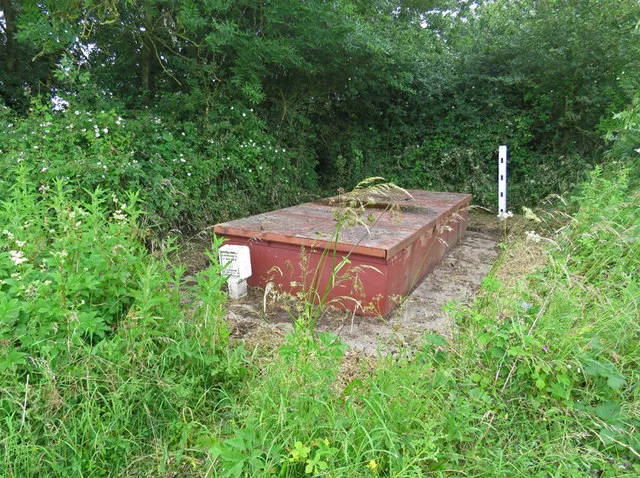
Photo: Andrew Tatlow , CC BY-SA 2.0, via Wikimedia Commons
The United States has spent the better part of two decades engineering a shale revolution that reshaped global energy markets. Production records have been broken, export terminals have multiplied, and domestic crude output has repeatedly defied analyst expectations. Yet beneath this headline success, a structural tension has been building — one rooted not in geology or commodity prices, but in steel, right-of-way permits, and the unglamorous logistics of moving hydrocarbons from wellhead to market.
Midstream infrastructure — the pipelines, compressor stations, gathering systems, and processing facilities that connect producers to end users — is increasingly becoming the binding constraint on US energy output. For operators who have invested heavily in drilling programs and completion technology, the inability to move product efficiently translates directly into deferred revenue, basis differentials, and, in some cases, forced curtailments.
The Anatomy of a Bottleneck
Pipeline capacity shortfalls are not a new phenomenon, but their implications have grown sharper as upstream productivity has outpaced infrastructure investment in several key basins. The Permian Basin in West Texas and southeastern New Mexico remains the most prominent example. Despite being the most prolific oil-producing region in the country, the Permian has experienced recurring episodes of takeaway congestion that have widened the Midland-to-Cushing price differential to uncomfortable levels for producers.
Similar dynamics have played out in the Appalachian Basin, where Marcellus and Utica natural gas output has consistently run ahead of pipeline egress capacity. Producers in that region have at times been forced to accept deeply discounted in-basin prices or curtail production entirely, even as gas demand elsewhere in the country remained robust. The Bakken in North Dakota presents yet another variation of the same problem, with crude-by-rail volumes serving as a persistent indicator that pipeline alternatives remain undersupplied relative to production.
The common thread across these regions is a mismatch between the speed at which drilling technology has advanced and the pace at which regulatory approvals, financing commitments, and construction timelines allow new infrastructure to materialize.
Regional Disparities in Access and Pricing
Not all basins face equivalent infrastructure stress. The Eagle Ford in South Texas, for instance, benefits from its proximity to Gulf Coast refining and export infrastructure, which has historically afforded producers comparatively reliable access to liquid markets. The DJ Basin in Colorado occupies a middle ground, with adequate takeaway for current production levels but mounting questions about whether existing capacity will accommodate longer-term growth scenarios.
These regional disparities create meaningful divergence in realized pricing. Producers in infrastructure-rich areas capture tighter differentials to benchmark prices, while those in constrained regions absorb wider discounts that can materially erode project economics. For independent operators working with thinner margin profiles, basis risk associated with pipeline access has become a factor that demands explicit consideration in capital allocation decisions — not merely a footnote in investor presentations.
Midstream analysts tracking these differentials have noted that basis volatility tends to spike during periods of accelerating upstream activity, particularly when new well completions in a given area outpace the incremental capacity additions that midstream companies have brought online. This cyclical pattern suggests that the bottleneck problem is not simply a function of existing infrastructure aging out — it also reflects the structural lag between upstream investment cycles and midstream response times.
What Operators Are Doing in the Interim
Faced with limited near-term options on the pipeline front, upstream operators have pursued several adaptive strategies to manage transportation constraints. Crude-by-rail, despite its higher cost structure relative to pipeline movement, has retained a meaningful role as a flex capacity option in the Bakken and, to a lesser extent, in the Permian. Rail's primary advantage is its relative speed of deployment — unit train agreements can be secured and operationalized far more quickly than pipeline construction projects can be permitted and built.
Truck transport serves a similar relief-valve function for shorter-haul gathering and regional movement, particularly for smaller independent operators who lack the volume commitments required to anchor dedicated pipeline capacity. While trucking economics are unfavorable at scale, they provide operational continuity when gathering systems are temporarily overwhelmed.
Some larger upstream companies have pursued vertical integration into midstream ownership as a hedge against third-party capacity risk. By holding equity stakes in gathering systems or long-haul pipelines, these operators gain preferential access to capacity and, in some cases, generate fee-based revenue that partially offsets their upstream exposure to commodity price cycles.
Commercially, producers have also become more sophisticated in structuring their midstream contracts, seeking greater flexibility provisions and capacity reservation arrangements that provide predictability in both constrained and oversupplied environments.
The Project Pipeline: What Is Coming and When
Several midstream development projects are advancing through various stages of regulatory review, financing, and construction that could meaningfully alleviate specific bottlenecks over the next three to five years. In the Permian, incremental expansions to existing long-haul crude systems and new natural gas pipeline projects targeting Waha Hub egress are among the most consequential near-term additions. The chronic oversupply of Permian natural gas — a byproduct of associated gas production from oil-directed drilling — has made additional gas takeaway capacity a particular priority, as flaring restrictions tighten and producers face growing pressure to reduce emissions intensity.
In Appalachia, the outlook for new pipeline construction remains complicated by a regulatory and legal environment that has stalled or terminated several high-profile projects in recent years. The Mountain Valley Pipeline, after years of litigation and permitting battles, reached mechanical completion in 2024, representing a meaningful addition to Appalachian egress capacity. Whether additional projects can successfully navigate the permitting gauntlet remains an open question, and the answer will significantly shape the long-term production trajectory of the basin.
The Broader Market Intelligence Takeaway
For energy sector professionals monitoring capital flows and production forecasts, the midstream infrastructure picture carries important implications. Upstream production guidance from publicly traded operators increasingly incorporates explicit assumptions about takeaway availability, and deviations from those assumptions — in either direction — can move company valuations and regional pricing benchmarks.
The midstream sector itself, historically valued for its stable, fee-based cash flow characteristics, is navigating its own strategic pressures. Investor appetite for large-scale greenfield pipeline investment has moderated relative to the peak construction years of the early 2010s, reflecting both energy transition uncertainty and memories of projects that encountered permitting or financing difficulties mid-construction.
The result is a market environment in which infrastructure gaps are likely to persist in specific regions even as overall US production continues to grow. For operators, midstream counterparties, and the financial institutions that serve both, understanding precisely where those constraints are most acute — and how quickly relief is realistically available — is becoming an essential component of sound market intelligence.