Squeezed at the Gate: Mapping the Margin Compression Facing US Refiners in a Turbulent Supply Environment
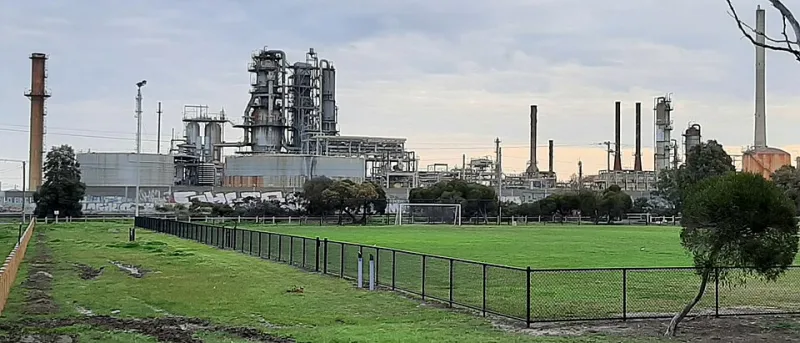
Photo: Sgroey, CC BY-SA 4.0, via Wikimedia Commons
The US refining sector entered the current fiscal cycle carrying expectations forged during an unusually profitable two-year run. The margin environment of 2022 and early 2023—characterized by historically wide crack spreads, constrained global refining capacity following pandemic-era shutdowns, and elevated distillate demand—conditioned many operators to plan around a structural profitability baseline that 2024's supply dynamics have since eroded. PetroMar Survey's proprietary Refinery Operator Sentiment Survey, conducted across 87 US processing facilities in Q2 and Q3 2024, documents this transition in granular detail and identifies the regional markets where margin pressure is most acute.
The Global Crude Flow Equation
Understanding current US refinery economics requires situating domestic operations within the broader international crude market. The partial restoration of Russian crude exports through alternative routing—primarily through Indian and Chinese intermediaries—has kept global supply volumes higher than many analysts projected following the initial wave of Western sanctions. This dynamic has tempered the crude price premium that US Gulf Coast refiners, with their comparative advantage in processing heavy sour grades, might otherwise have captured.
Simultaneously, OPEC+ production discipline has introduced a degree of medium-grade crude scarcity that complicates feedstock planning for refineries configured around Arab Medium or similar grades. PetroMar Survey data indicates that 34 percent of Gulf Coast refinery respondents reported at least one quarter in 2024 during which feedstock substitution was required due to preferred crude grade availability constraints—a figure that stood at just 18 percent in the comparable 2022 survey period.
Midcontinent refineries face a somewhat different crude supply calculus. Access to Permian and Bakken light sweet crude via pipeline has insulated many inland processors from the worst of the international supply volatility. However, the light-sweet crude glut that periodically develops in Cushing, Oklahoma, has compressed WTI-based feedstock differentials, narrowing the cost advantage that Midcontinent refiners have historically enjoyed relative to their coastal peers.
Renewable Fuel Mandates: Compliance Cost as a Structural Drag
Among the clearest findings in PetroMar Survey's 2024 refinery data is the growing weight of Renewable Fuel Standard compliance costs on operator economics. The Renewable Identification Number market has experienced significant price volatility over the past 18 months, creating planning uncertainty for refineries that must acquire RINs to meet blending obligations or purchase exemptions.
Small refinery exemption petitions to the US Environmental Protection Agency have become a contentious and time-consuming process, with approval timelines extending well beyond the fiscal periods to which they apply. Among survey respondents at facilities with throughput capacity below 75,000 barrels per day, 61 percent characterized RFS compliance cost management as a "significant" or "major" factor in their annual margin planning—up from 47 percent in PetroMar's 2022 refinery survey.
Larger integrated refiners with co-located renewable diesel or biodiesel production capacity are better positioned to manage this obligation internally, effectively converting a compliance cost into a revenue stream. Independent merchant refiners without that infrastructure face a structural disadvantage that is unlikely to diminish as federal renewable volume obligations continue their scheduled escalation.
Regional Margin Profiles: Where the Pressure Is Greatest
PetroMar Survey's regional analysis identifies meaningful variation in margin performance across the four principal US refining corridors.
Gulf Coast (PADD 3): The Gulf Coast remains the nation's dominant refining center, processing approximately 55 percent of total US crude throughput. Margin performance in this region has been mixed in 2024, with complex coking refineries generally outperforming simpler hydroskimming configurations. The region's access to waterborne crude imports provides feedstock flexibility, but export-oriented product markets have introduced additional price sensitivity tied to international refined product demand.
East Coast (PADD 1): East Coast refiners, already operating with structural disadvantages related to Jones Act shipping constraints and higher operating costs, reported the weakest margin sentiment in PetroMar's survey cohort. Sixty-nine percent of PADD 1 respondents characterized current margin conditions as "below acceptable threshold," the highest such reading among all regions surveyed. Several facilities in this corridor have accelerated feasibility studies for partial conversion to renewable fuels processing as a strategic hedge.
Midcontinent (PADD 2): As noted above, Midcontinent operators benefit from domestic crude access but face compressed differentials. Survey sentiment in this region was the most stable, with 52 percent of respondents describing current margins as "adequate" relative to their cost of capital—the most favorable reading in the national survey.
West Coast (PADD 5): California refiners operate within a uniquely complex regulatory environment, subject to the state's Low Carbon Fuel Standard in addition to federal RFS obligations. PetroMar data shows that West Coast operators allocate, on average, 14 percent more per barrel to environmental compliance than their Gulf Coast counterparts. Despite elevated retail fuel prices in the California market, refinery gate margins have not kept pace with compliance cost growth.
Operator Strategic Responses
In the face of these pressures, PetroMar Survey data reveals a range of strategic responses. Throughput optimization—running refineries at utilization rates calibrated to margin conditions rather than maximum capacity—has become more common. Among survey respondents, 44 percent indicated they had deliberately reduced throughput in at least one quarter of 2024 to avoid processing crude at a negative margin contribution, a practice that reflects improved operational discipline compared to prior cycles.
Capital investment priorities have also shifted. Spending on yield improvement and energy efficiency projects has increased relative to capacity expansion, with 71 percent of respondents prioritizing projects with payback periods under three years. This short-horizon investment bias reflects both margin uncertainty and the evolving long-term demand outlook for refined petroleum products.
A smaller but strategically significant cohort—approximately 19 percent of respondents—reported active evaluation or implementation of co-processing arrangements that allow conventional crude refining infrastructure to partially process bio-based feedstocks. This pathway offers a potential route to RFS compliance cost reduction while preserving existing asset value.
Intelligence Priorities for Market Participants
For crude traders and supply chain planners, the regional margin differentiation documented in PetroMar Survey's data underscores the importance of monitoring refinery run rates and feedstock preferences at the facility level rather than relying solely on aggregate national throughput figures. Margin compression in PADD 1 and PADD 5 translates directly into reduced crude import demand from those regions, with knock-on effects for Atlantic Basin and Pacific Basin crude pricing.
For investors with downstream exposure, the divergence between complex coking refineries and simpler configurations suggests continued outperformance potential for the former, particularly if distillate margins recover on the back of improving industrial demand or weather-driven heating fuel requirements. PetroMar Survey will publish its Q4 2024 Refinery Utilization and Margin Outlook in January 2025, providing updated facility-level intelligence for energy sector professionals managing downstream market exposure.