Independent Operators Seize the Shale Frontier: How Smaller Producers Are Rewriting the Rules of US Energy Output
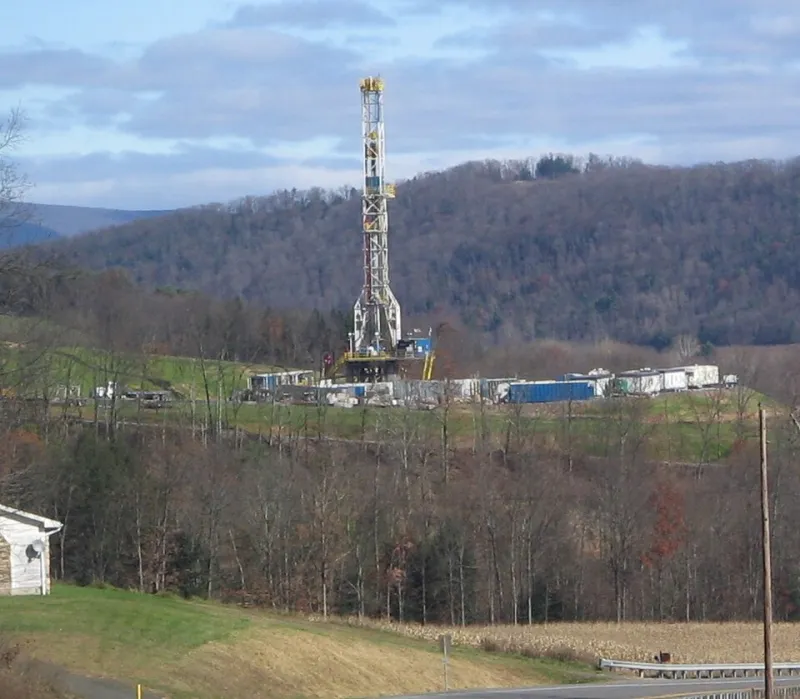
Photo: Ruhrfisch (talk), CC BY-SA 4.0, via Wikimedia Commons
For much of the past two decades, the narrative surrounding US shale production has been anchored to the ambitions of the industry's largest integrated players—ExxonMobil, Chevron, and their peers—whose balance sheets and global reach seemed to define the ceiling of domestic unconventional output. That narrative is shifting. According to proprietary survey data collected by PetroMar Survey across more than 340 operators in Q3 2024, independent and mid-size producers holding proved reserves below 500 million barrels of oil equivalent are now collectively responsible for a growing share of new well completions, acreage acquisitions, and technology pilots across the Permian Basin, the Bakken, and the Eagle Ford.
This is not merely a story about market share. It is a story about structural change—one with direct implications for energy service companies, private equity sponsors, and the federal agencies tasked with projecting domestic supply capacity.
The Capital Allocation Divergence
PetroMar Survey's Q3 2024 Operator Sentiment Index recorded a notable divergence in capital allocation strategies between super-majors and independent operators. While integrated companies have increasingly directed discretionary cash flow toward low-carbon initiatives, share buyback programs, and international portfolio management, smaller domestic producers have maintained a sharper focus on core shale acreage development.
Among respondents operating with reserves under 500 million BOE, 67 percent indicated they planned to increase or maintain upstream capital expenditure in their primary shale plays through the first half of 2025. By contrast, only 41 percent of respondents from larger integrated firms signaled comparable domestic upstream commitment over the same horizon. This gap reflects a fundamental difference in corporate mandate: independent operators, less burdened by global portfolio obligations and shareholder pressure to diversify into energy transition assets, are free to pursue concentrated, basin-specific drilling programs.
The financial discipline demonstrated by this cohort is equally notable. Following the industry-wide capital destruction of 2015–2016 and the demand collapse of 2020, many independent operators rebuilt their balance sheets with a near-religious commitment to free cash flow generation. PetroMar survey data indicates that 58 percent of mid-size respondents now maintain a formal internal rate of return threshold—typically between 15 and 25 percent—before sanctioning new well development, a practice that was far less common in the pre-2015 environment.
Technology Adoption at the Basin Level
One of the more counterintuitive findings from PetroMar Survey's field research concerns technology adoption. Conventional wisdom has long held that smaller operators lag behind their larger counterparts in deploying advanced completion techniques, digital oilfield tools, and data analytics platforms. The current data complicates that assumption.
Among independent operators surveyed, 44 percent reported active deployment of real-time downhole monitoring systems in at least a portion of their active well inventory—a figure that reflects the declining cost of sensor technology and the expanding availability of cloud-based data platforms tailored to smaller operational footprints. Furthermore, 39 percent of respondents indicated they had piloted or fully adopted simul-frac or zipper-frac completion techniques within the past 18 months, citing meaningful reductions in cost per lateral foot and improvements in initial production rates.
Service companies operating in the Permian and Midcontinent regions should take note. The independent operator segment is no longer a secondary market for innovation—it is, in many basins, the primary proving ground. Equipment providers, software developers, and well service contractors who calibrate their offerings to the operational scale and budget constraints of mid-size producers stand to capture a disproportionate share of near-term contract flow.
Reserve Monetization and the Exit Strategy Calculus
Beyond drilling activity, PetroMar Survey's data illuminates an important strategic dynamic around reserve monetization. Approximately 29 percent of independent operators surveyed indicated they had received, evaluated, or actively solicited acquisition interest from larger industry participants within the past 12 months. This figure is consistent with the elevated pace of upstream M&A activity observed across US unconventional plays in 2023 and 2024, as super-majors and large independents seek to replenish inventory through bolt-on and transformational acquisitions rather than greenfield exploration.
For smaller operators, the prospect of a strategic sale or acreage divestiture represents a legitimate endpoint in the value creation cycle. Many entered specific plays with the explicit intention of delineating acreage, establishing production history, and ultimately monetizing that effort through a sale to a better-capitalized acquirer. This model—sometimes described informally as the "drill-to-sell" approach—has proven durable across multiple commodity price cycles and continues to attract private equity capital into the upstream space.
Investors evaluating exposure to this segment should assess not only production metrics and reserve life but also the quality of an operator's acreage position relative to known acquisition corridors. Proximity to existing midstream infrastructure, well performance relative to type curves, and the operator's relationship history with potential acquirers are all variables that PetroMar Survey's deal intelligence tracking monitors on a quarterly basis.
Policy Implications for Federal and State Regulators
The growing influence of independent operators carries meaningful implications for energy policy at both the federal and state levels. The US Energy Information Administration's long-range supply projections have historically been calibrated in part against the announced capital programs of major integrated producers. If the independent sector is quietly absorbing a larger share of actual drilling activity, those projections may require recalibration.
At the state level, regulators in Texas, North Dakota, New Mexico, and Wyoming are already managing an increasingly fragmented operator landscape. Compliance monitoring, environmental permitting, and flaring regulation become more administratively complex as the number of active independent operators expands. State oil and gas commissions that have invested in digital permitting and compliance platforms are better positioned to manage this complexity without proportional increases in regulatory staff.
Federal leasing and royalty policy also intersects with this dynamic. Independent operators are, on balance, more dependent on federal acreage in certain basins—particularly in the Permian's Delaware Basin and in the Williston—than their integrated counterparts. Policy shifts affecting lease sales, royalty rates, or permitting timelines therefore carry outsized consequences for the independent segment.
Looking Ahead
The structural forces enabling independent and mid-size operators to punch above their weight in US shale are unlikely to reverse in the near term. Lower completion costs, improved well productivity, accessible capital markets, and a deep inventory of drillable locations across established plays provide a durable foundation for continued activity. PetroMar Survey will continue tracking operator sentiment, capital allocation trends, and technology adoption rates across this segment throughout 2025, providing energy professionals with the granular intelligence required to make informed decisions in an increasingly complex domestic market.