Still Flowing, Already Forsaken: The Economics Behind Voluntary Well Abandonments in America's Mature Basins
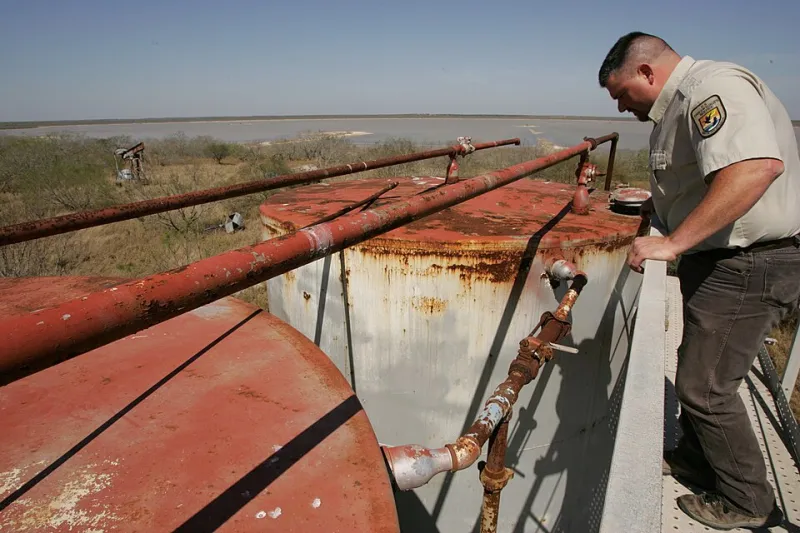
Photo: Steve Hillebrand / USFWS, Public domain, via Wikimedia Commons
Conventional wisdom in the oil and gas sector holds that a producing well is a valuable well. Revenue is revenue, and so long as hydrocarbons flow to surface, the asset earns its keep. That logic, long foundational to how operators have managed mature inventory, is now being quietly but systematically dismantled in basins stretching from Appalachia to the Permian shelf.
What is emerging in its place is a more complicated calculus—one in which cash-generating assets are being voluntarily retired not because they have run dry, but because the full cost of keeping them alive has begun to exceed what the market will bear. For energy sector professionals tracking capital efficiency and asset strategy across US operations, this trend deserves careful attention.
When the Ledger Turns Against a Producing Asset
To understand voluntary abandonment, it is necessary to move beyond the wellhead economics that dominated operator decision-making in earlier decades. A well producing fifty barrels per day at current West Texas Intermediate prices may appear straightforwardly profitable on a simple revenue-minus-lifting-cost basis. But that calculation increasingly omits several cost categories that are growing in both scale and regulatory certainty.
Foremost among these is plugging and abandonment liability. State regulators across California, Pennsylvania, Ohio, and Wyoming have tightened bonding requirements and accelerated enforcement timelines for idle and marginal wells. Operators carrying large inventories of low-rate producers now face mandatory plugging schedules that can run to millions of dollars per well in complex geological settings. When the present value of that future liability is properly discounted and applied against projected revenue streams, the arithmetic frequently turns negative—sometimes dramatically so.
Environmental compliance adds another layer. Methane reporting obligations under the Environmental Protection Agency's Subpart W program, combined with state-level leak detection and repair mandates, impose recurring operational costs that fall disproportionately on older wellstock. Infrastructure that was installed decades ago was not designed with modern emissions monitoring in mind, and retrofitting aging equipment to meet current standards can consume margins that were never especially wide to begin with.
Basin-Level Vulnerability: Where the Pressure Is Greatest
Not all producing regions face equal exposure to voluntary abandonment economics. Several factors determine where the trend is most acute, including geological age, regulatory environment, operator type, and the prevailing cost structure of basin-level operations.
Appalachia presents perhaps the most visible case study. The region's conventional production—distinct from the Marcellus and Utica shale plays that have attracted most recent investment—consists of thousands of legacy wells, many of which are held by smaller independent operators and even private individuals. Plugging costs in the region can reach $50,000 to $150,000 per well depending on depth and casing condition, and state regulators in Pennsylvania and West Virginia have grown increasingly assertive in compelling action. For operators managing portfolios of dozens or hundreds of such wells, the financial burden of maintaining compliance across the full inventory can outstrip the aggregate revenue those wells produce.
The Mid-Continent—encompassing Oklahoma and southern Kansas—faces a related dynamic. Mature conventional fields in this region have seen sustained production decline over decades, and many operators have responded by reducing staff and infrastructure support to the bare minimum. When regulatory pressure increases or commodity prices soften, the marginal economics of continued operation collapse quickly. Oklahoma's Corporation Commission has documented a meaningful uptick in voluntary plugging applications filed by operators seeking to shed liability before state enforcement compels action under less favorable terms.
Even portions of the Permian Basin, often characterized as the engine of American oil production, are not immune. The basin's prolific unconventional zones attract the bulk of capital and attention, but its conventional shelf zones host a substantial population of aging vertical wells. As major operators rationalize their portfolios toward high-return horizontal development programs, conventional inventory is being evaluated with fresh skepticism. Wells that survive a pure production analysis may not survive a full-cost review that incorporates allocated overhead, regulatory compliance, and future abandonment obligations.
The Capital Reallocation Dimension
Beyond regulatory and liability pressures, a structural shift in how operators allocate capital is accelerating voluntary abandonment decisions. Institutional investors and publicly traded exploration and production companies have spent the better part of the past decade recalibrating toward return-on-capital metrics and free cash flow generation. That shift has introduced a form of internal competition among assets that did not previously exist with the same intensity.
In practical terms, this means that a well producing modest but positive cash flow now competes for continued operational support against alternative uses of that same capital—whether higher-return drilling opportunities, debt reduction, or shareholder distributions. When operational resources are constrained, as they routinely are for mid-size independents managing large and geographically dispersed portfolios, low-rate conventional wells frequently lose that competition.
The result is a form of voluntary abandonment driven not by outright financial loss, but by opportunity cost. The asset remains technically profitable; it simply does not clear the internal hurdle rate that capital discipline now demands. This distinction matters for how analysts and market observers interpret abandonment data. A well plugged under these circumstances does not signal distress in the conventional sense—it signals a strategic repositioning of where operators believe their capital generates the most durable value.
Implications for Asset Valuation and Market Intelligence
For professionals engaged in asset acquisition, reserve assessment, or regulatory affairs, the voluntary abandonment trend carries several practical implications worth incorporating into analytical frameworks.
First, headline reserve figures and production volumes from mature basins may overstate the economically recoverable resource base when full-cost liability accounting is applied. Buyers evaluating conventional asset packages should scrutinize plugging cost estimates with particular care, particularly in states where bonding requirements have recently been revised upward.
Second, the pace of voluntary abandonment is likely to accelerate rather than stabilize. Federal and state regulatory trajectories continue to move toward stricter idle well enforcement, and the financial pressure on smaller operators holding legacy inventory shows no sign of easing. Observers tracking basin-level production trends should factor this into long-range output projections.
Third, the orphaned well problem—in which operators that lack the financial capacity to plug their wells simply dissolve, leaving liability to the state—represents the shadow risk of the current environment. When voluntary abandonment economics become too punishing even for operators willing to exit in good standing, the probability of disorderly outcomes increases. Several states have begun drawing on federal infrastructure funding to address existing orphan well backlogs, but that capital addresses historical legacy rather than the inventory being created under current market conditions.
Redefining the Profitability Floor
What the voluntary abandonment trend ultimately reveals is that the petroleum sector's effective profitability threshold in mature US operations is considerably higher than simple wellhead economics suggest. The true break-even for a conventional well—one that accounts for regulatory compliance, environmental liability, allocated overhead, and the opportunity cost of capital—is a more demanding standard than the industry has historically applied.
For market intelligence purposes, this recalibration has lasting significance. It suggests that reported production from mature basins carries embedded fragility, that asset valuations in conventional plays require more rigorous liability-adjusted analysis, and that the operators best positioned to navigate this environment are those who have already internalized full-cost thinking into their portfolio management disciplines.
The wells being abandoned today were not failures. In many cases, they were successes by the standards of an earlier era. That they are being surrendered now, while still producing, is perhaps the clearest signal yet that the economics of American petroleum have fundamentally changed—not at the frontier, but in the fields that built the industry.