The Second Life Question: Reassessing the True Value of Aging Conventional Fields in America's Mature Basins

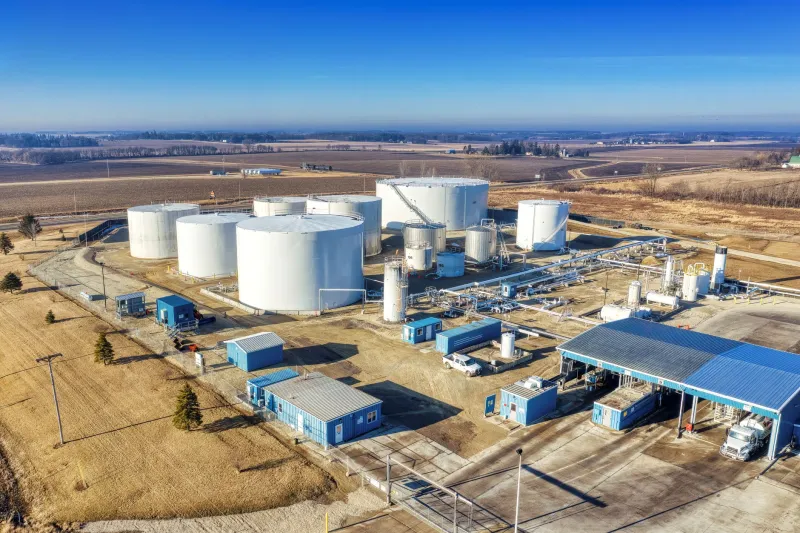
Photo by Photo by Jeff W on Unsplash on Unsplash
For decades, the conventional fields scattered across the Permian's deeper horizons, the Appalachian basin, the Illinois basin, and California's San Joaquin Valley were the reliable, if unglamorous, backbone of domestic petroleum output. Today, many of those same assets occupy an uncomfortable middle ground in operator portfolios — generating modest cash flow, carrying escalating regulatory obligations, and sitting in a capital allocation environment that increasingly favors newer, higher-margin plays. The central question confronting producers, private equity sponsors, and independent operators alike is not simply whether these fields are profitable today, but whether they can remain so under the weight of what is coming.
Why Legacy Fields Are Back Under the Microscope
The renewed scrutiny of mature conventional assets is not accidental. A confluence of pressures has forced portfolio reviews that might otherwise have been deferred. Federal and state regulators have tightened methane emission standards, well-plugging requirements, and financial assurance obligations — the last of which requires operators to demonstrate they can cover the eventual cost of decommissioning. For fields with hundreds of low-producing stripper wells, those plugging liabilities can dwarf the remaining recoverable value on a net present value basis.
At the same time, the major integrated companies and larger independents that once anchored conventional basin operations have systematically divested these holdings in favor of shale-focused portfolios with more predictable decline curves and scalable development economics. The result has been a cascade of asset transfers to smaller operators — many of them thinly capitalized — who accepted favorable acquisition prices without fully accounting for the regulatory tail risk embedded in aging well stock.
This dynamic has created a bifurcated market. On one side are legacy fields that, despite their age, retain genuine commercial merit. On the other are assets that have become, in the language of energy finance, effectively stranded — producing too little to justify ongoing investment and too expensive to abandon responsibly.
The Metrics That Separate Viable from Vulnerable
Distinguishing between these two categories requires moving beyond simple production volumes. Analysts tracking mature basin economics have identified several determinative factors.
Lifting cost per barrel of oil equivalent remains the primary screen. Fields where lifting costs exceed realized prices by even a narrow margin under a sustained commodity downturn scenario carry existential risk. In some older California fields and portions of the Mid-Continent, lifting costs in the range of $40 to $60 per BOE are not uncommon, leaving virtually no buffer against price volatility.
Well count relative to production is equally telling. A field producing 500 barrels per day across 20 wells presents a fundamentally different regulatory and operational profile than one generating the same output from 400 stripper wells. The latter carries proportionally higher inspection costs, greater methane leak exposure, and a decommissioning liability that can run into the tens of millions of dollars.
Regulatory jurisdiction introduces a geographic dimension that deal-makers frequently underweight. Assets operating under California's increasingly stringent environmental framework face a materially different cost trajectory than comparable fields in Wyoming or Kansas, where regulatory postures remain comparatively accommodating. This jurisdictional arbitrage — the differential value created by operating in lower-compliance-cost states — has quietly become one of the more significant variables in legacy asset pricing.
Where the Acquisition Opportunity Actually Lies
For well-capitalized buyers with operational expertise and a realistic view of liability management, the current environment presents identifiable opportunities — provided the underwriting discipline is rigorous.
The most defensible targets tend to share a common profile: concentrated well counts, low water handling costs, proximity to existing gathering infrastructure, and jurisdictions with stable or declining regulatory intensity. The Anadarko basin in Oklahoma and portions of the Permian's conventional Wolfcamp and Spraberry zones — distinct from the tight-oil horizons attracting horizontal drilling capital — offer examples where these conditions sometimes converge.
Private equity firms with dedicated upstream platforms have been among the more active acquirers in this space, drawn by the valuation discounts applied to conventional assets by sellers eager to simplify their portfolios. Several transactions over the past 18 months have priced mature field packages at multiples that imply little or no terminal value — a pricing signal that can create genuine upside for operators who can reduce lifting costs through artificial lift optimization, targeted workovers, and disciplined well rationalization.
There is also an emerging class of buyers approaching legacy fields from a non-traditional angle: companies focused on carbon sequestration and enhanced oil recovery using CO2 injection. Depleted conventional reservoirs with the right geological characteristics — sufficient porosity, structural integrity, and proximity to CO2 supply — are attracting interest not just as production assets but as potential sequestration sites eligible for federal tax credits under the expanded 45Q framework. This optionality is not yet reflected in most conventional asset valuations, representing a potential pricing inefficiency for informed acquirers.
The Liability Trap and How Operators Are Navigating It
Not every legacy field story ends with a value-accretive acquisition. The industry has accumulated a troubling inventory of what regulators and environmental advocates call "orphaned wells" — abandoned wellbores whose responsible operators have either dissolved or transferred the assets to entities unable to fund proper plugging. The Infrastructure Investment and Jobs Act of 2021 allocated $4.7 billion toward plugging orphaned wells on state and federal lands, but that figure addresses only a fraction of the estimated liability.
For active operators, the risk is not necessarily that their fields reach orphan status, but that tightening financial assurance requirements — which compel operators to post bonds or establish escrow accounts against future plugging costs — will consume working capital that would otherwise fund maintenance and modest development activity. Several mid-sized conventional operators have already found themselves in regulatory standoffs with state oil and gas commissions over assurance adequacy, a dynamic that can accelerate divestiture decisions and further depress asset pricing.
Sophisticated sellers are increasingly structuring transactions to address this dynamic directly, either by retaining plugging liability for the oldest, lowest-producing wells while divesting the more productive remainder, or by negotiating indemnification arrangements that allocate tail risk between parties based on well vintage and production history.
Intelligence Implications for Industry Professionals
The mature basin landscape is not a monolithic story of decline. It is a differentiated market in which asset quality, jurisdictional context, operational sophistication, and emerging policy frameworks are producing widely divergent outcomes for otherwise similar-looking fields. For energy sector professionals — whether on the buy side, the sell side, or the regulatory interface — the analytical imperative is to resist category-level generalizations and engage with the asset-specific economics that actually determine value.
What the data suggests, on balance, is that the most significant risk in legacy field investing is not geological depletion. It is the failure to fully price regulatory and decommissioning obligations at the point of acquisition. The operators and investors who internalize that lesson early are positioning themselves to extract real value from a segment of the market that larger capital has largely written off — sometimes prematurely.