Sentiment Over Spreadsheets: What Operators on the Ground Know Before the Models Do
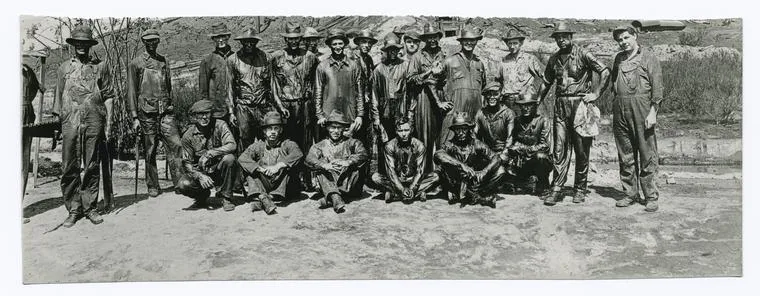
Photo: U.S. Geological Survey, Public domain, via Wikimedia Commons
Every January, the major banks publish their year-end crude price targets with confidence bordering on ceremony. And every December, the industry looks back at those numbers with the same quiet embarrassment. Over the past ten years, consensus forecasts for WTI have missed the actual year-end settle by more than 15% in the majority of vintages — including several years where the consensus was wrong on direction entirely. The 2014 collapse, the 2020 negative print, and the 2022 spike all caught the overwhelming majority of published forecasts flat-footed.
The problem is not that analysts lack talent or data. It is that the models they run are structurally backward-looking, calibrated on inventory levels, rig counts, and macro assumptions that shift only after conditions on the ground have already changed. By the time a model registers a supply disruption or a demand inflection, the trade is over.
Where the Models Fall Short
Consider what a typical price model actually ingests: EIA weekly balances, OPEC+ communiqués, futures curves, and macroeconomic projections. What it does not ingest is what a Permian pump shop's order book looks like this quarter, whether a Gulf Coast refiner is quietly deferring turnaround work, or how a midstream dispatcher reads throughput on a key gathering line. Those signals are anecdotal, scattered, and unglamorous — which is precisely why they lead the published data by weeks or months.
Rig counts, the industry's favorite shortcut, are a case study in lag. By the time a rig is spudded or stacked, the capital decision behind it was made two to four quarters earlier. Sentiment, by contrast, is expressed at the moment of decision.
What Our Respondents Are Telling Us
PetroMar Survey maintains a rolling panel of roughly 500 operational decision-makers across the upstream, downstream, and midstream sectors. Unlike trader positioning or sell-side polls — which mostly measure the mood of people who profit from volatility — our respondents are the people whose capex and scheduling choices actually move physical barrels.
Three patterns from recent survey cycles stand out:
- Capex intent leads published activity by roughly two quarters. When our upstream respondents signaled a pullback in drilling budgets in early cycles, the Baker Hughes count did not turn for months afterward.
- Refiner utilization expectations outperform actual utilization data as a spread signal. When downstream respondents report tightening crude differentials in their procurement outlook, product cracks tend to follow.
- Midstream confidence is the quiet tell. Gathering and pipeline operators see volume commitments before they show up in any balance sheet. Their responses have repeatedly front-run headline production revisions.
A Practical Framework
None of this argues for abandoning quantitative models. It argues for sequencing: use operational sentiment to establish direction, then use models to size and time the exposure. A forecaster who knows that conditions are shifting — before knowing by exactly how much — holds a genuine informational edge over one waiting for the next weekly statistical release.
For energy professionals, the takeaway is straightforward. Treat consensus price targets as a contrarian artifact rather than a planning input. Treat the people actually running drilling programs, crude procurement desks, and pipeline scheduling as the earliest available sensor network the industry has. The barometer that matters is not on a trading floor. It is in the field.